

The Unravelling of Giants: The Roman Empire's Collapse and Its Enduring Lessons for Modern Societies
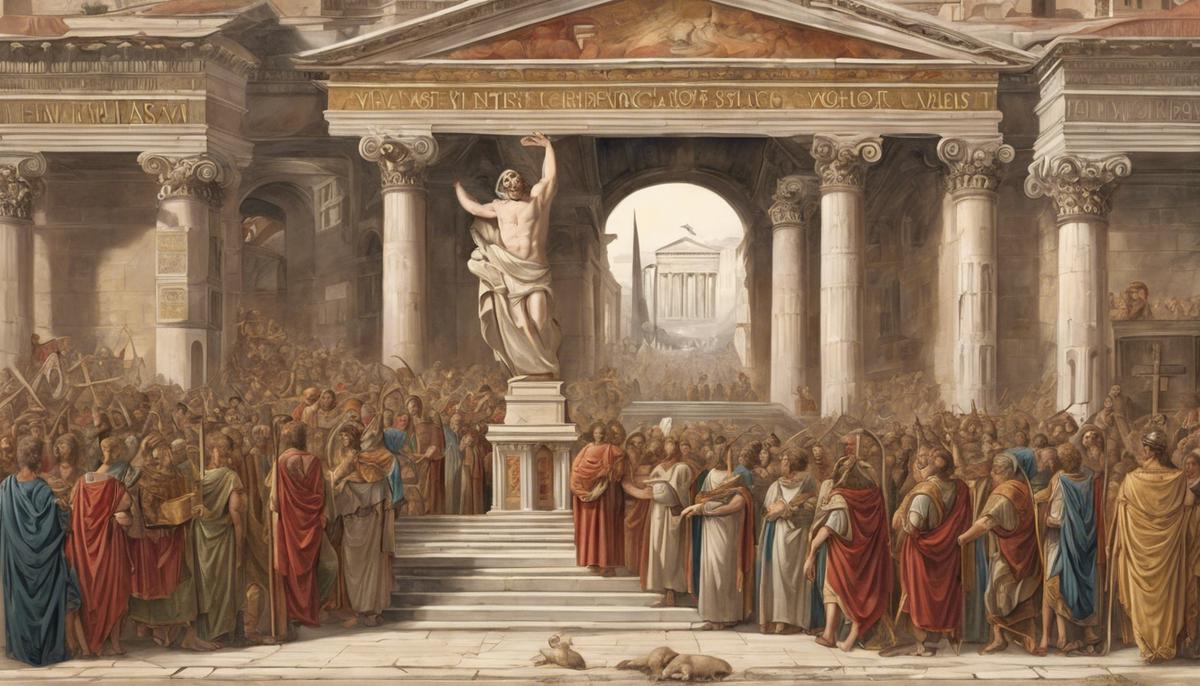
💡 Introduction: The Illusion of Invincibility
For over a thousand years, the Roman Empire stood as the epitome of power, engineering marvel, and administrative sophistication. Its vast reach, formidable legions, and enduring cultural legacy have shaped Western civilization. Yet, even this seemingly invincible empire eventually crumbled, with the Western Roman Empire formally collapsing in 476 CE. The question of "Why did Rome fall?" has fascinated historians for centuries, yielding not a single answer but a complex tapestry of interconnected factors.
The collapse of Rome is more than just a historical event; it is a profound cautionary tale, offering invaluable lessons for modern societies grappling with their own challenges of economic stability, social cohesion, and geopolitical overstretch. While direct comparisons are simplistic, the underlying patterns of decline—economic stagnation, social fragmentation, political corruption, and external pressures—resonate disturbingly with contemporary issues.
Ignoring these historical echoes would be a profound folly. Understanding Rome's decline helps us recognize early warning signs in our own systems.
This Trusted Time analysis delves into the multifaceted causes of the Roman Empire's collapse, dissecting its economic vulnerabilities, social decay, and the challenges of military overextension. We will draw crucial parallels to modern nation-states and global powers, extracting enduring lessons in governance, resilience, and the critical importance of internal strength in the face of external threats.
Part I: The Economic Erosion—From Prosperity to Stagnation
Rome's economic decline was a slow, insidious process that undermined its very foundations.
1. Inflation and Debasement of Currency
The Roman economy, initially robust, began to falter under financial mismanagement.
Military Costs: Maintaining a vast empire and its legions was astronomically expensive. Wars of conquest brought wealth, but defending borders became a drain.
Currency Debasement: To pay for military and public works, emperors repeatedly debased the currency by reducing the precious metal content (silver in the denarius). This led to rampant inflation, eroding the purchasing power of citizens and making trade difficult.
Loss of Trust: Constant currency debasement destroyed public trust in the state's financial integrity, pushing the economy towards a less efficient barter system and regional self-sufficiency, away from central control.
2. Stagnation, Trade Imbalances, and High Taxation
Beyond currency issues, structural economic problems persisted.
Lack of Innovation: The Roman economy was largely agrarian and relied on slave labor. This discouraged technological innovation and capital investment, leading to stagnation.
Trade Imbalances: Rome imported luxury goods (silk from China and spices from India) but had little to export of equal value, leading to a drain of precious metals.
Crushing Taxation: To offset declining revenues and military costs, taxes on the populace became increasingly burdensome, especially on the working poor and small farmers. This pushed many into poverty or dependence on large landowners, reducing their incentive to contribute to the central economy.
Part II: The Social Fabric Unravels—Decay from Within
Economic woes were compounded by a slow, corrosive social decay that weakened the empire's internal cohesion.
3. Inequality and the Decline of the Middle Class
The gap between the rich and poor widened dramatically over centuries.
Latifundia (Large Estates): Wealthy landowners consolidated vast tracts of land, often buying out struggling small farmers. This created a large, landless, impoverished class dependent on the state for food.
The "Bread and Circuses": To prevent civil unrest, the state provided free grain and spectacular entertainment (gladiatorial games) to the urban poor. While it maintained temporary peace, it fostered dependency, discouraged productive work, and drained state resources.
Erosion of Civic Duty: As the middle class (the backbone of the legions and local administration) disappeared, civic participation and a sense of shared responsibility declined, replaced by apathy and self-interest.
4. Political Corruption and Military Over-reliance
The political system became increasingly brittle and unstable.
Imperial Instability: The lack of a clear succession mechanism led to frequent coups, assassinations, and civil wars. Loyalty shifted from the state to individual generals.
Soldier-Emperors: During the "Crisis of the Third Century," over 20 emperors reigned in 50 years, most gaining power through military might rather than legitimate succession. This led to constant internal strife and neglected borders.
Dependence on Mercenaries: As Roman citizens became less willing to serve, the legions increasingly relied on foreign mercenaries (often Germanic tribes), whose loyalty was to their paymasters rather than to Rome itself. This ultimately allowed barbarian generals to exert immense influence, leading to the deposition of the last Western Roman Emperor.
Part III: The External Pressure and Enduring Lessons
While internal decay was paramount, external pressures were the final straw for the Western Roman Empire.
5. Barbarian Invasions and Overextension
Rome's vast borders became indefensible, particularly in the West.
Migration Pressure: Climate change and pressure from nomadic groups (like the Huns) pushed Germanic tribes (Goths, Vandals, and Franks) towards Roman borders, seeking land and safety.
Resource Drain: The empire was simply too large to defend effectively with its dwindling resources. Fortifications and legions were stretched thin, leading to repeated breaches and loss of territory.
Sack of Rome: The sack of Rome by the Visigoths in 410 CE and the Vandals in 455 CE were psychological blows that shattered the illusion of Roman invincibility, even if they were not the sole cause of the collapse.
6. Enduring Lessons for Modern Governance and Societies
The fall of Rome offers timeless warnings:
Economic Prudence: The danger of unsustainable public spending, currency debasement, and reliance on excessive taxation to fund an overextended state.
Social Cohesion: The critical importance of a thriving middle class, reducing extreme inequality, and fostering a shared sense of civic responsibility to prevent social fragmentation.
Adaptability and Innovation: Societies must continually adapt to new challenges (economic, technological, and environmental) and invest in innovation rather than stagnating due to reliance on past glories or rigid systems.
Balanced Power: The perils of an overly militarized society where loyalty shifts from institutions to individuals, leading to political instability and internal conflict.
Global Interdependence: While Rome’s trade imbalances were different, the lesson of sustainable economic models (avoiding massive debt or resource drains) is relevant today.
Conclusion: The Unseen Decay
The Roman Empire did not fall in a single dramatic event; it slowly unraveled over centuries, weakened from within by economic mismanagement, social decay, and political corruption, and eventually overwhelmed by external pressures that it no longer had the internal strength to resist.
The central lesson is that no empire, no nation, is invincible. The strength of a society lies not just in its military might or economic output, but in the health of its internal systems: its financial stability, the fairness of its social contract, the integrity of its governance, and the adaptive capacity of its people.
By studying Rome’s fall, we gain a crucial historical mirror, prompting us to vigilantly assess our own foundations and to remember that true resilience comes from within.
