

The Debt Duel: Debt Snowball vs. Debt Avalanche Method – Which Repayment Strategy is Best for Your Finances?
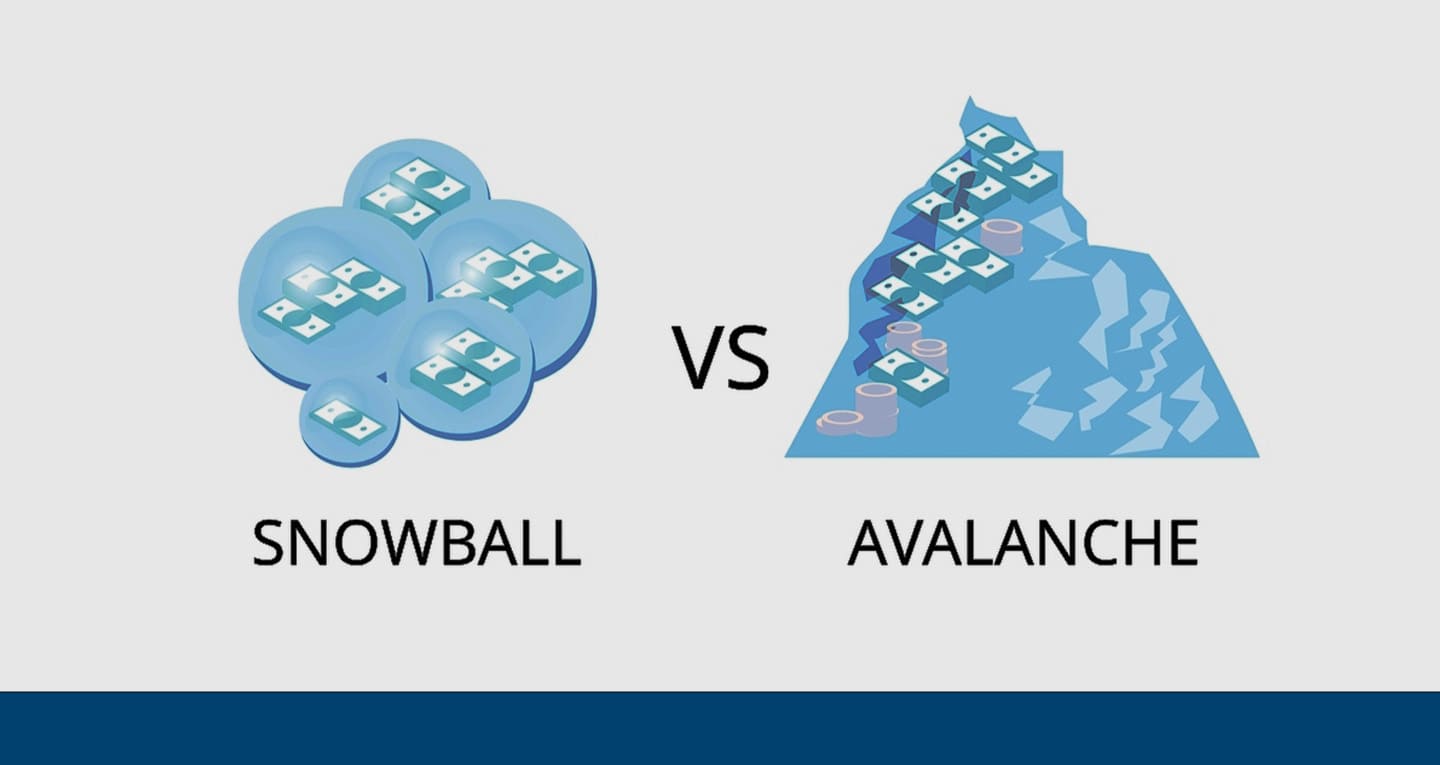
Debt repayment relies on choosing the right strategy: psychological momentum or mathematical efficiency.
💡 Introduction: The Strategy of Financial Freedom
Debt is a massive anchor. The weight of multiple payments often leads to paralysis. Fortunately, systematic strategies like the Debt Snowball and Debt Avalanche can help you pay off debt faster than making minimum payments.
These methods use fundamentally different drivers: Snowball relies on psychology (quick wins), and Avalanche on pure mathematics (saving money). The right choice is the one you can stick with consistently.
This Trusted Time analysis breaks down the pros, cons, and mechanism of both, providing a clear framework to help you decide which debt repayment strategy is the best fit for your personality.
Part I: The Debt Snowball Method – The Power of Quick Wins
How the Snowball Works (Psychology First)
You list all your debts from smallest balance to largest balance, ignoring the interest rate.
- The List: Order debts from smallest balance to largest.
- Minimum Payments: Pay minimums on all debts except the smallest one.
- Attack the Smallest: Throw all extra cash at the smallest debt.
- The Roll: Once cleared, take the entire payment amount (old minimum + extra cash) and roll it into the next smallest debt.
The effect is building mental momentum through rapid, visible progress.
Pros and Cons of the Snowball
| Aspect | Pros (Psychological Win) | Cons (Mathematical Loss) |
|---|---|---|
| Motivation | Provides immediate, early wins that build confidence and prevent burnout. | You will often pay more in total interest (since high-interest debts are left until later). |
| Simplicity | Very easy to understand and implement; high success rate for the easily discouraged. | Takes longer to achieve final debt-free status than the Avalanche method. |
Part II: The Debt Avalanche Method – Pure Mathematics
How the Avalanche Works (Math First)
You list all your debts from highest interest rate to lowest interest rate, ignoring the total balance.
- The List: Order debts from highest interest rate (APR) to lowest.
- Minimum Payments: Pay minimums on all debts except the highest-interest one.
- Attack the Highest: Throw all extra cash at the highest-interest debt.
- The Roll: Once cleared, roll the payment amount into the next-highest-interest debt.
The effect is saving the maximum amount of money by cutting the most expensive debt first.
Pros and Cons of the Avalanche
| Aspect | Pros (Mathematical Win) | Cons (Psychological Loss) |
|---|---|---|
| Savings | Minimizes the total interest paid, saving the most money in the long run. | Early wins can take a long time, especially if the highest-interest debt is also your largest. |
| Efficiency | The fastest method to become debt-free in terms of time and overall cost. | High potential for burnout and discouragement due to lack of immediate payoff. |
Part III: The Crucial Decision – Which Method is Right for You?
5. A Hypothetical Comparison (Example Debts)
Assume an extra ₹10,000 monthly payment is available for debt repayment.
| Debt | Balance | Interest Rate | Min. Payment |
|---|---|---|---|
| A (Credit Card) | ₹1,50,000 | 28% (Highest) | ₹5,000 |
| B (Personal Loan) | ₹50,000 | 12% | ₹1,500 |
| C (Car Loan) | ₹2,00,000 | 8% (Lowest) | ₹4,000 |
In this scenario:
- Avalanche Order: A (28%) -> B (12%) -> C (8%). Saves the most interest.
- Snowball Order: B (₹50k) -> A (₹150k) -> C (₹200k). Provides the first win fastest.
6. The Final Framework for Choosing
| If Your Obstacle is... | Choose... | Rationale |
|---|---|---|
| Motivation / Consistency | Debt Snowball | You need psychological reinforcement from quick, visible results to stay engaged. |
| The Highest Cost (Interest) | Debt Avalanche | You are disciplined and focused purely on saving the maximum amount of money possible. |
| Feeling Overwhelmed (Many Debts) | Debt Snowball | It rapidly reduces the number of debts you manage, making the overall task feel less daunting. |
Conclusion: Find Your Momentum
Neither method is fundamentally "wrong." The Debt Avalanche is financially superior, while the Debt Snowball is behaviorally superior.
The best strategy is always the one you are most likely to stick with until that final debt balance hits zero. Choose the method that fits your personality!